Complete Information About Cellular Jail in Andaman Islands: History, Architecture, Freedom Struggle, Light and Sound Show, Ticket Price, Timings, and Travel Guide
The Cellular Jail, located in the Andaman Islands and famously referred to as Kala Pani, is widely recognized as one of the darkest yet most historically significant landmarks of India’s freedom struggle. Nestled in Port Blair, the bustling capital city of the Andaman and Nicobar Islands, this colossal colonial-era prison was strategically built by the British to exile, punish, and isolate Indian political prisoners, freedom fighters, and revolutionaries who bravely opposed colonial rule. Designed with a unique cellular architecture, the jail once housed hundreds of freedom fighters under severe conditions, making it an enduring symbol of suffering, resistance, courage, and patriotism. The relentless struggles endured by the prisoners within its walls have etched the Cellular Jail into the heart of India’s historical narrative, representing the unwavering spirit of those who sacrificed everything for the nation’s independence.
Today, the Cellular Jail National Memorial stands as a solemn tribute to these heroes, attracting tourists, history enthusiasts, researchers, and international travelers who wish to witness the remarkable legacy of India’s fight for freedom. Visitors to the site can explore a wealth of historical information, including the complete history of the jail, its architectural brilliance, the meticulously designed individual cells, and the stories of the freedom fighters who were imprisoned here. Additionally, the jail offers detailed visitor information such as opening and closing hours, entry fees, exact location in Port Blair, guided tours, and the renowned light and sound show, which vividly narrates the heroic tales of sacrifice and resilience.
This comprehensive guide not only provides practical travel tips for a smooth visit but also emphasizes the educational and cultural significance of the Cellular Jail, making it an indispensable destination for anyone seeking to understand the profound struggles of India’s freedom movement. Whether you are planning a historical tour, conducting research, or simply wish to connect with the rich cultural heritage of India, the Cellular Jail in Port Blair offers an unparalleled experience, combining historical insight, architectural marvel, and a deep, emotional connection to the nation’s past. A visit here is more than just a journey to a site; it is an exploration of the enduring spirit of sacrifice, resilience, and patriotism that shaped the course of India’s independence, making the Cellular Jail a must-visit landmark for every traveler and history aficionado.
History of Cellular Jail – The Kala Pani Legacy
The construction of Cellular Jail started in 1896 and was completed in 1906. The British chose the Andaman Islands as the location because of its isolation from mainland India. Prisoners sent here had no escape route, making it a perfect site for confinement.
-
The name Kala Pani literally means “Black Water,” symbolizing exile and extreme punishment.
-
The prison housed hundreds of revolutionaries who were subjected to torture, forced labor, and solitary confinement.
-
Prominent freedom fighters like Veer Savarkar, Yogendra Shukla, Batukeshwar Dutt, Ullaskar Dutta, and Babarao Savarkar were imprisoned here.
-
Many inmates perished due to inhuman treatment, malnutrition, and lack of medical care.
The Cellular Jail thus became a silent witness to India’s struggle for independence, preserving the stories of courage and sacrifice of those who endured its walls.
Architectural Design of Cellular Jail
The architecture of Cellular Jail is unique and haunting:
-
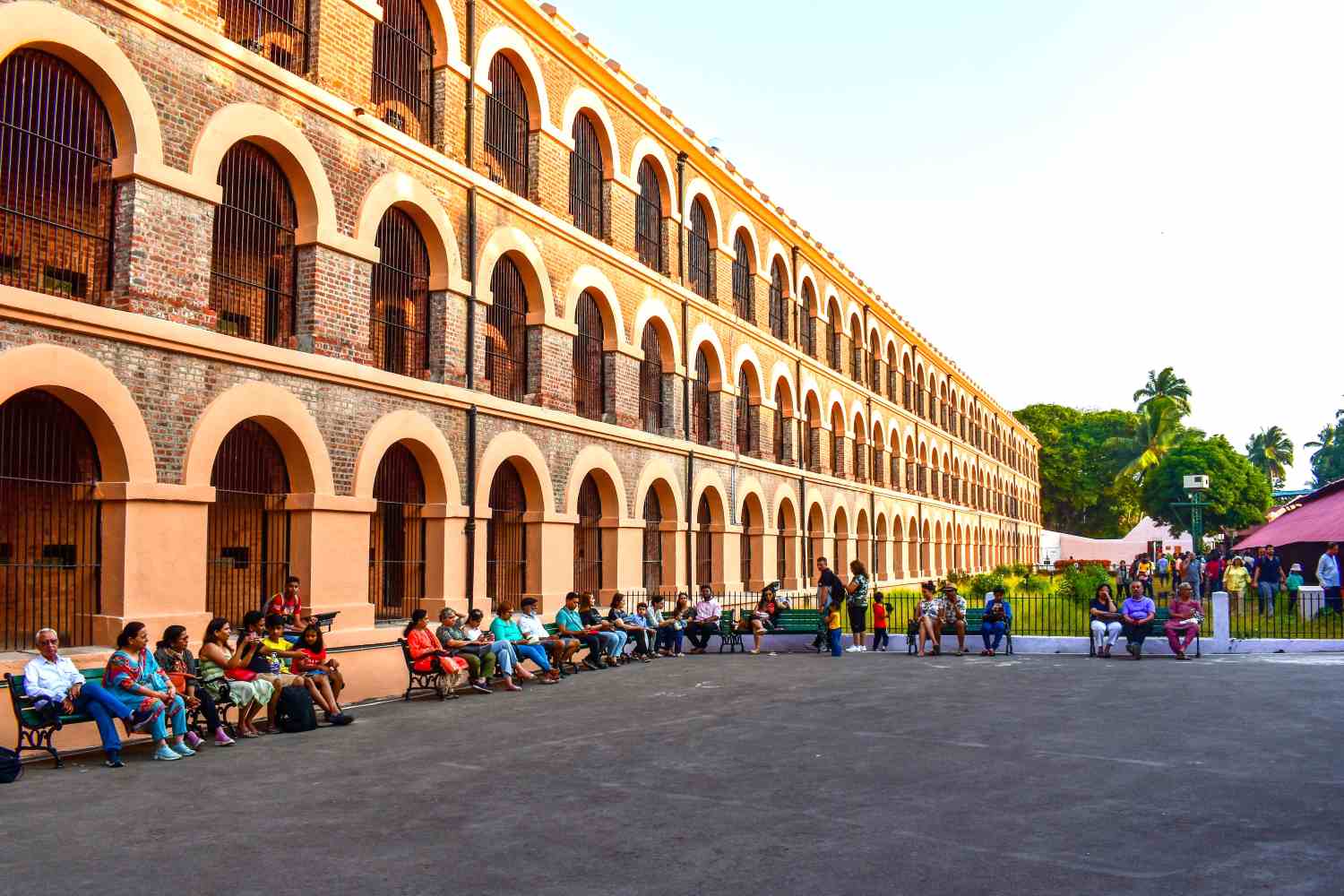
The prison was built in the shape of a seven-winged structure radiating from a central watchtower, resembling the spokes of a wheel.
-
Each wing had three stories and contained a total of 693 solitary cells.
-
Each cell measured about 13.5 feet by 7 feet, designed for solitary confinement.
-
The design ensured that no two prisoners could communicate, enforcing complete isolation.
-
The central tower allowed guards to monitor all wings simultaneously.
Today, only three wings remain intact, but they are preserved as part of the Cellular Jail National Memorial Museum.
The Sufferings of Prisoners
The Cellular Jail was infamous for its brutal punishments:
-
Prisoners were forced into hard labor, such as oil grinding, rope making, and other back-breaking tasks.
-
Solitary confinement broke their spirit, as they were denied human contact.
-
Many underwent flogging, physical torture, and starvation.
-
Despite the pain, prisoners continued to sing patriotic songs and organize resistance, keeping the flame of freedom alive.
This makes Cellular Jail not just a prison but also a symbol of India’s resilience against colonial oppression.
Cellular Jail Museum and Memorial
Today, the Cellular Jail is a National Memorial that educates and inspires visitors:
-
The museum exhibits photographs, letters, and personal belongings of freedom fighters.
-
Galleries showcase the history of India’s independence movement.
-
The names of freedom fighters are engraved on its walls to honor their sacrifices.
-
The gallows used for execution still stand as a chilling reminder of the past.
Light and Sound Show at Cellular Jail
The Light and Sound Show is one of the most powerful experiences at Cellular Jail.
-
Held in the evenings, the show narrates the history of Kala Pani using dramatic storytelling, sound effects, and lighting.
-
Available in Hindi and English, it recreates the voices of freedom fighters and the tragic yet inspiring past.
-
The show leaves a deep emotional impact, reminding visitors of the price of freedom.
👉 Show Timings: Usually at 6:00 PM and 7:15 PM (timings may vary).
👉 Tickets: ₹300 – ₹350 per person (varies for Indian and foreign nationals).
Cellular Jail Timings and Entry Fee
Here is the updated visitor information:
-
Visiting Hours: 9:00 AM – 12:30 PM and 1:30 PM – 4:45 PM
-
Closed: Mondays and National Holidays
-
Entry Fee: ₹30 per person
-
Camera Fee: ₹200 for still camera, ₹1000 for video camera
-
Light & Sound Show Ticket: ₹300 – ₹350
👉 Travel Tip: Buy tickets online in advance, especially during peak tourist seasons.
How to Reach Cellular Jail in Andaman Islands
Cellular Jail is located in the heart of Port Blair.
-
By Air: The nearest airport is Veer Savarkar International Airport in Port Blair, well connected to Chennai, Kolkata, Bengaluru, Hyderabad, and Delhi.
-
By Sea: Passenger ships operate from Chennai, Kolkata, and Visakhapatnam to Port Blair, though journeys take 3–4 days.
-
From the airport, Cellular Jail is only about 3–4 km away, reachable by taxi, bus, or auto-rickshaw.
Best Time to Visit Cellular Jail
The best season to visit Andaman and explore Cellular Jail is between October and March, when the weather is pleasant. Evening visits are especially recommended if you plan to attend the light and sound show.
Importance of Cellular Jail in Modern India
Today, Cellular Jail stands as a National Memorial to freedom fighters. It is not just a tourist destination but a sacred site of patriotism and sacrifice.
-
It serves as a reminder of the cruelty of colonial rule.
-
It educates younger generations about the cost of independence.
-
It preserves the memory of hundreds of revolutionaries who laid down their lives for India.
Quick Facts About Cellular Jail
-
Location: Port Blair, Andaman Islands, India
-
Built: 1896–1906
-
Known As: Kala Pani
-
Type: Solitary confinement prison
-
Current Status: National Memorial and museum
-
Famous Attraction: Light and Sound Show
List of FAQs About Cellular Jail in the Andaman Islands
The Cellular Jail in Port Blair, Andaman Islands, stands as one of India’s most powerful symbols of freedom and sacrifice. Known as Kala Pani, this colonial prison witnessed the suffering of countless Indian freedom fighters who were exiled here during British rule. Today, the Cellular Jail is one of the most visited historical monuments in the Andaman and Nicobar Islands, drawing history enthusiasts, students, and travelers from around the world. Below is a detailed list of FAQs (Frequently Asked Questions) about the Cellular Jail, covering everything from its history and visiting details to ticket prices, timing, and travel tips — a complete guide for anyone planning to visit this iconic heritage site.
1. What is the Cellular Jail in Andaman Islands?
The Cellular Jail, also known as Kala Pani, is a historical colonial prison located in Port Blair, the capital of the Andaman and Nicobar Islands. Built by the British between 1896 and 1906, it was used to imprison Indian freedom fighters and political prisoners in isolated cells. The term “Cellular” refers to the individual cells designed to keep prisoners in solitary confinement.
2. Why is it called Cellular Jail or Kala Pani?
It is called Cellular Jail because the entire structure was made up of small individual cells, preventing any communication between prisoners. The name Kala Pani, meaning “Black Water,” was given because prisoners were transported across the sea (considered taboo in those times), isolating them from the mainland forever.
3. Where is Cellular Jail located?
The Cellular Jail is located in Port Blair, the capital city of the Andaman and Nicobar Islands, India. It is approximately 2 km from the main city center and easily accessible by road.
4. How can I reach Cellular Jail from Port Blair Airport?
The Veer Savarkar International Airport in Port Blair is just 4–5 km away from the Cellular Jail. Visitors can take a taxi, auto-rickshaw, or local bus to reach the jail within 10–15 minutes.
5. What are the visiting hours of Cellular Jail?
The Cellular Jail is open from 9:00 AM to 12:30 PM and again from 1:30 PM to 4:45 PM. The monument remains closed on Mondays and national holidays. Visitors are advised to check timings during public holidays or maintenance periods.
6. What is the entry fee for Cellular Jail?
The entry fee for Cellular Jail is ₹30 per person for Indian nationals and ₹100 per person for foreign tourists. Additional charges apply for still and video cameras — ₹200 and ₹1000 respectively. The Light and Sound Show has a separate ticket price ranging between ₹100 and ₹300 per person, depending on seating and language preference.
7. What is the Light and Sound Show at Cellular Jail?
The Light and Sound Show at Cellular Jail is a must-watch attraction. It narrates the heart-wrenching story of India’s freedom struggle, focusing on the prisoners’ lives, their sacrifices, and the history of the jail. The show runs in both Hindi and English, usually held in the evening. The combination of dramatic narration, lighting effects, and patriotic music makes it an emotional and unforgettable experience for all visitors.
8. How can I book tickets for the Cellular Jail Light and Sound Show?
Tickets can be booked online through the Andaman Tourism official website or purchased directly at the jail’s ticket counter. Online booking is recommended, especially during tourist seasons between October and May, to avoid long queues.
9. Who were the famous freedom fighters imprisoned in Cellular Jail?
Many prominent Indian freedom fighters were imprisoned here, including Veer Savarkar, Batukeshwar Dutt, Yogendra Shukla, and Barindra Kumar Ghosh (brother of Sri Aurobindo). These revolutionaries were tortured and forced into labor for participating in India’s struggle for independence.
10. What is the historical significance of Cellular Jail?
The Cellular Jail stands as a national memorial of India’s freedom movement. It symbolizes the immense sacrifice and resilience of freedom fighters who endured inhumane conditions and solitary confinement. The jail serves as a reminder of India’s colonial past and the courage of those who fought for independence.
11. Can tourists enter inside the Cellular Jail?
Yes, tourists can enter and explore the interior of the Cellular Jail. Visitors can walk through the corridors, see the small individual cells, the gallows, and the central watchtower. Exhibits, photographs, and preserved artifacts provide deep insights into the prisoners’ lives and struggles.
12. How long does it take to tour the Cellular Jail?
A complete tour of the Cellular Jail usually takes 1.5 to 2 hours. Visitors can explore the galleries, museum exhibits, and memorial areas at their own pace. If attending the Light and Sound Show, plan for an additional hour in the evening.
13. Is there a museum inside the Cellular Jail?
Yes, the Cellular Jail Museum displays historical documents, photographs, models, and personal belongings of prisoners. It provides valuable information about India’s freedom struggle and the brutal conditions endured by political detainees.
14. Is photography allowed inside Cellular Jail?
Photography is allowed inside the jail with a nominal fee. However, visitors are requested to respect museum guidelines and avoid using flash photography in certain areas to preserve old documents and exhibits.
15. Are guided tours available in Cellular Jail?
Yes, guided tours are available and highly recommended. Trained guides narrate historical facts, stories of the prisoners, and details about the architecture, helping visitors understand the significance of each section of the jail.
16. What is the best time to visit Cellular Jail?
The best time to visit Cellular Jail is between October and May, during the Andaman Islands’ tourist season. The weather is pleasant, making it ideal for sightseeing and attending the Light and Sound Show.
17. Can foreigners visit the Cellular Jail?
Yes, foreigners are welcome to visit the Cellular Jail. They must carry valid ID proof, and tickets can be purchased just like Indian citizens. Many foreign tourists visit the site to understand India’s colonial history.
18. Is the Cellular Jail wheelchair accessible?
The ground floor of the Cellular Jail is partially accessible for wheelchair users. However, upper floors and towers may not be suitable due to steep staircases. Visitors with mobility challenges can still explore key parts of the museum and memorial sections.
19. Are there any restaurants or refreshment areas near Cellular Jail?
Yes, there are small cafeterias and local food stalls outside the Cellular Jail premises offering snacks, tea, and refreshments. Many popular restaurants in Port Blair are within walking distance.
20. What are some attractions near the Cellular Jail?
Nearby attractions include Ross Island (Netaji Subhas Chandra Bose Island), Corbyn’s Cove Beach, Anthropological Museum, Chidiya Tapu, and Samudrika Marine Museum. Most of these are within a short distance, making it easy to plan a day tour around Port Blair.
21. Can I visit the gallows area inside the Cellular Jail?
Yes, the gallows area, where prisoners were executed during the British era, is open to visitors. It serves as a solemn reminder of the extreme cruelty faced by India’s freedom fighters.
22. What is the architecture of the Cellular Jail like?
The Cellular Jail was designed with seven wings radiating from a central watchtower, resembling the spokes of a wheel. Each wing had three stories, containing 693 solitary cells. The design ensured maximum isolation for each prisoner, emphasizing the cruelty of British punishment.
23. What should I wear when visiting Cellular Jail?
Since the Cellular Jail is a national monument and place of remembrance, visitors should dress modestly. Comfortable clothes and footwear are recommended, as there is a lot of walking involved.
24. Is parking available at the Cellular Jail?
Yes, there is ample parking space available near the entrance for both two-wheelers and four-wheelers.
25. Are there souvenir shops at Cellular Jail?
Yes, a small souvenir shop near the exit sells books, miniature jail models, keychains, and handicrafts inspired by the Andaman Islands. These make for memorable keepsakes of your visit.
26. Can I visit Cellular Jail at night?
Visitors cannot explore the jail interior at night, but they can attend the Light and Sound Show held in the evening. Night entry beyond the show timings is not permitted.
27. How is the maintenance and preservation of Cellular Jail handled?
The Archaeological Survey of India (ASI) and Andaman & Nicobar Tourism Department are responsible for maintaining the Cellular Jail as a National Memorial. Continuous restoration and preservation work ensures the monument’s historical integrity is protected.
28. Is Cellular Jail included in Andaman tour packages?
Yes, almost all Andaman tour packages include a visit to the Cellular Jail and the Light and Sound Show. It’s one of the first attractions tourists visit upon arrival in Port Blair.
29. Why should I visit the Cellular Jail?
Visiting the Cellular Jail offers a powerful historical experience — a chance to witness India’s freedom struggle through preserved architecture, real stories, and emotional narratives. It’s not just a monument but a memorial to the indomitable spirit of freedom fighters.
Conclusion
The Cellular Jail in Andaman Islands is more than a historic site—it is a symbol of sacrifice, resilience, and India’s fight for freedom. With its unique architecture, moving history, museum exhibits, and the unforgettable light and sound show, a visit to this landmark is both educational and emotional.
If you are planning a trip to the Andaman Islands, the Cellular Jail in Port Blair should be at the top of your itinerary. It not only tells the story of India’s past but also instills a deep respect for the sacrifices that shaped the nation’s future.